
BIOPHILIC DESIGN: An approach to design that promotes reciprocity between humans and nature, fostering mutually beneficial relationships through built environments. It is a verb and process, not a noun or product.
Biophilic design is not about greening our buildings or simply increasing their aesthetic appeal through inserting trees and shrubs. Much more, it is about humanity’s place in nature, and the natural world’s place in human society.
Stephen R. Kellert and Judith H. Heerwagen (Kellert et al., 2008: page vi)
Biophilic Design: Principles, Benefits, and Services
Biophilic design is essential for developing healthier, more efficient work environments by strengthening the bond between individuals and nature. Adding natural elements like plants, sunlight, and organic materials can lower stress levels, stimulate creativity, and promote overall well-being. Research indicates that employees in spaces featuring biophilic elements tend to report higher job satisfaction, better concentration, and improved mental health. Emphasizing biophilic design benefits not only employee health and happiness but also contributes to greater organizational success.
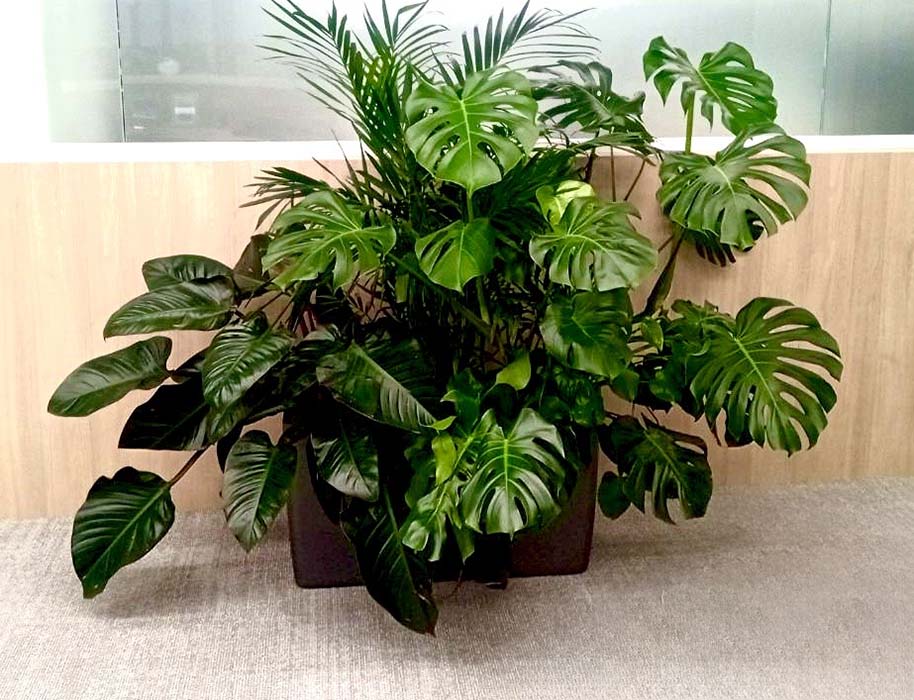
The Three Pillars of Biophilic Design
Natural Analogues
Natural analogues are design elements that replicate the patterns, forms, and textures found in nature often seen in plants, wood, or stone. Biophilic design encompasses not only these natural analogues, but also brings in colors, smells, shapes, and sounds inspired by the natural world.
Nature IN the Space
Indoor plants can regulate humidity, filter light, and improve air quality in ways similar to how natural vegetation functions outdoors. Arranging plants intentionally, such as grouping them together or placing them in a natural way, can mimic the natural environment and improve comfort and overall well-being.
Nature OF the Space.
The concept of “nature of the space” in offices, hotel lobbies, schools, and other commercial spaces centers on shaping an open, welcoming environment. The addition of indoor plants enhances this experience by making the space feel more relaxing and naturally connected to nature.
Sectors Benefiting From Biophilic Design
Biophilic design isn’t limited to one type of environment. It can make a meaningful difference anywhere people live, work, heal, learn, or gather. While the goals will vary from one setting to the next, the core idea stays the same: bringing natural elements into a space in ways that help people feel better, function better, and feel more connected to their surroundings. Here’s how that translates across different sectors.
Less absenteeism, more productivity. Research indicates that when people feel healthier and happier in their environment, they’re more engaged, focused, and motivated.
What Research Shows
Biophilic workplace design has been linked to improved well-being, lower stress, and stronger productivity.
“Restorative work environments are spaces designed to provide workers with a closer nature experience, with biophilic elements such as plants, water, natural light, and visual representations of nature. These natural elements in the workplace have been associated with benefits for well-being, mental health, productivity, and worker performance.”
Sources:
Gonçalves, Gabriela, Cátia Sousa, Maria Jacinta Fernandes, Nuno Almeida, and António Sousa.
“Restorative effects of Biophilic workplace and nature exposure during working time: a systematic review.” International journal of environmental research and public health 20, no. 21 (2023): 6986.)
Ríos-Rodríguez ML, Testa Moreno M, Moreno-Jiménez P.
Nature in the Office: A Systematic Review of Nature Elements and Their Effects on Worker Stress Response. Healthcare (Basel). 2023 Oct 27;11(21):2838. doi: 10.3390/healthcare11212838. PMID: 37957983; PMCID: PMC10650689. In summary, this study constitutes a significant contribution to the existing body of knowledge by examining the intersection between biophilic design and stress in the workplace. It provides practical and applicable recommendations for employers and workplace designers on how to effectively incorporate natural elements to reduce workplace stress.
Faster recovery, reduced burnout. Patients, providers, and assisted living facilities all experience greater comfort and improved emotional well-being in environments enhanced by biophilic design.
What Research Shows
Sources:
Ulrich RS.
View through a window may influence recovery from surgery. Science. 1984 Apr 27;224(4647):420-1. doi: 10.1126/science.6143402. PMID: 6143402.
Park SH, Mattson RH.
Ornamental indoor plants in hospital rooms enhanced health outcomes of patients recovering from surgery. J Altern Complement Med. 2009 Sep;15(9):975-80. doi: 10.1089/acm.2009.0075. PMID: 19715461. Conclusions: Findings of this study confirmed the therapeutic value of plants in the hospital environment as a noninvasive, inexpensive, and effective complementary medicine for surgical patients. Health care professionals and hospital administrators need to consider the use of plants and flowers to enhance healing environments for patients.
Improved learning settings lead to cognitive gains. In academic settings, these improvements foster deeper student engagement, enhanced focus, and higher overall academic achievement.
What Research Shows
Sources:
Ghaziani, Rokhshid. 2025.
“Re-Thinking Biophilic Design for Primary Schools: Exploring Children’s Preferences” Architecture 5, no. 3: 42. This paper identifies the potential role of biophilic design features in promoting children’s happiness in a primary school from their own perspectives. The empirical study explored children’s preferences related to eight patterns from two categories of direct and indirect connection to nature.
Browning, W.; Determan, J.
Outcomes of Biophilic Design for Schools.
Architecture 2024; Heschong, L. (1999)
Daylighting in Schools. An Investigation into the Relationship Between Daylighting and Human Performance.
Rodney H. Matsuoka’s 2010
Student performance and high school landscapes: Examining the links. This study aligns with the biophilia hypothesis, which suggests that humans have an innate tendency to connect with nature.
Fadda, R.; Congiu, S.; Roeyers, H.; Skoler, T.
Elements of Biophilic Design Increase Visual Attention in Preschoolers. Buildings 2023.
Increased dwell time, higher sales. In the retail industry, inviting natural elements into stores not only encourages customers to linger longer but also leads to stronger brand loyalty and more frequent purchases.
What Research Shows
Sources:
Peer-reviewed studies demonstrate the positive effects of indoor plants and biophilic design on customer behavior in commercial spaces:
Dwell Time Increases:
Joye, Y., & van den Berg, A. (2011)
“Is love for green in our genes? A critical analysis of evolutionary assumptions in restorative environments research.” Urban Forestry & Urban Greening. This review finds that green elements lengthen the time spent in retail environments.
Wolf, K. L. (2005)
“Business District Streetscapes, Trees, and Consumer Response.” Journal of Forestry. When shown images of greener retail settings, respondents indicated that an acceptable price to pay was 15% – 20% higher for various items.
Brand Loyalty and Purchase Behavior:
Han, H., & Hyun, S. S. (2017)
“Impact of hotels’ green practices on brand loyalty: The mediating role of perceived health benefits.” International Journal of Hospitality Management. This study explores how green and biophilic practices in hotels (which directly applies to hospitality-focused retail spaces) enhance customer loyalty by increasing perceived health and well-being benefits.
Biophilic design in hospitality promotes guest well-being and relaxation by bringing nature indoors. It also boosts customer satisfaction and encourages repeat visits.
The nice thing is, there’s a movement toward what people want. As a brand, guests’ expectations lean toward health and wellness. That means creating biophilic, sustainable and wellness-focused spaces isn’t just a sound investment. It’s doing the right thing.
Brian Vickery Senior Director, Design and Construction, Four Seasons Hotels and Resorts
(Source: Doing the Right Thing: Why Hotels Are Embracing Biophilic Design. Fat Plant Society)
What Research Shows
Sources:
Science Direct: Effects of biophilic design on consumer responses in the lodging industry.)
In the lodging industry, biophilic design can be applied by providing a view of nature, large windows, water features, or plants. By introducing biophilic elements to a hotel’s physical environment, a guest’s need for connection with nature may be fulfilled. As a result, biophilic design may stimulate emotional states, quality perception, favorable attitude, and behavioral responses in the space. Thus, adding biophilic elements to a hotel’s design will further differentiate the hotel from others, creating and maintaining an added advantage to hotel operations.“
Han, H., & Hyun, S. S. (2017)
“Impact of hotels’ green practices on brand loyalty: The mediating role of perceived health benefits.” International Journal of Hospitality Management.” This study explores how green and biophilic practices in hotels (which directly applies to hospitality-focused retail spaces) enhance customer loyalty by increasing perceived health and well-being benefits. “Based on the data, we suggest that the demand for biophilic buildings will be strongly increased during the post-COVID-19 era.”
Khozaei, Fatemeh, Claus Christian Carbon, Mahdieh Hosseini Nia, and Mi Jeong Kim. 2022
“Preferences for Hotels with Biophilic Design Attributes in the Post-COVID-19 Era” Buildings 12, no. 4: 427.
Biophilic design helps create healthier, more welcoming community spaces that encourage social interaction. In government buildings, civic centers, and libraries, natural elements can enhance public engagement, boost productivity, and foster a sense of civic pride, making everyone feel more comfortable and connected.
What Research Shows
Lee, Hyo Chang, and Sung Jun Park.
“Assessment of importance and characteristics of biophilic design patterns in a children’s library.” Sustainability 10, no. 4 (2018): 987.
Söderlund, J., & Newman, P. (2015). Biophilic architecture: a review of the rationale and outcomes.
AIMS Environmental Science, 2(4), 950–969. A study highlighted in this review discusses the Frick Environmental Center in Pittsburgh, a civic environmental education and community facility, where biophilic design strategies led to increased community engagement and provided measurable psychological and environmental benefits to visitors. The review also notes other civic centers where similar gains were observed, including reduced stress and increased satisfaction among public users.
Gray, Tonia, and Carol Birrell.
“Are biophilic-designed site office buildings linked to health benefits and high performing occupants?” International journal of environmental research and public health 11, no. 12 (2014): 12204-12222.
How Indoor Plants Support Biophilic Design
Indoor plants play an important role in biophilic design because they bring living natural elements directly into the built environment. While biophilic design also includes natural light, organic materials, and spatial planning, plants are often one of the most immediate ways to strengthen the connection between people and nature indoors.
In offices, healthcare settings, schools, retail spaces, hospitality venues, and homes, spatial planning is central to interior plantscaping because it determines where plants go, how they function in a space, and how people move around them.
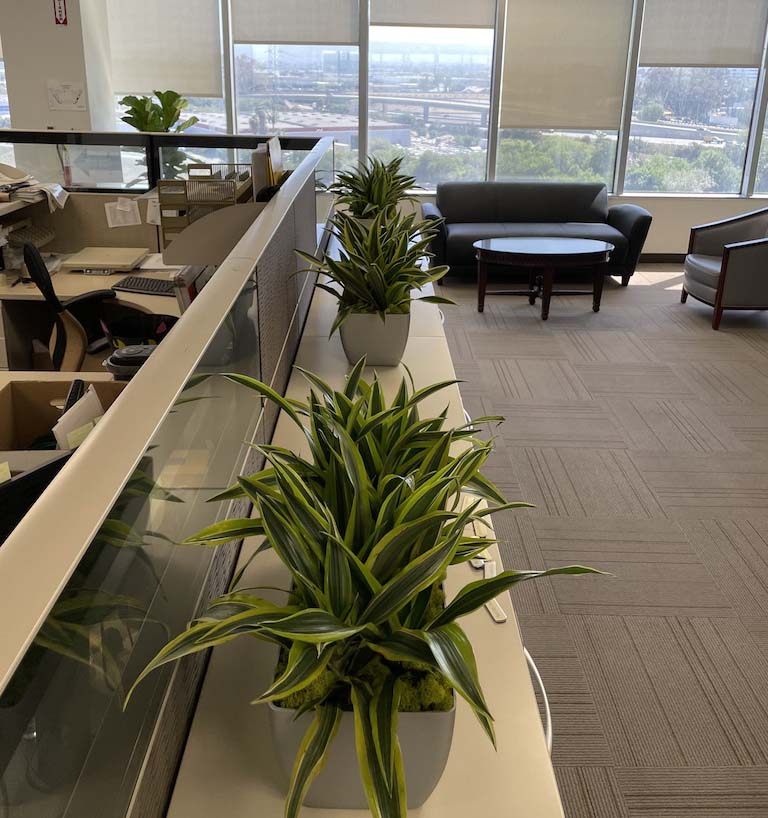

Planning a space that feels more natural, cohesive, and aligned with how it’s meant to be used?
How Indoor Plants Support Indoor Environmental Quality
Within biophilic design, indoor plants can support a better environment by contributing to air quality, humidity balance, and overall comfort. Their value is not only visual. Plants also help shape spaces that prioritize comfort, environmental quality, and a closer relationship to the natural world. When used alongside other natural elements, they can help indoor environments feel more active, functional, and better suited to everyday use.
Enhancing Comfort and Well-Being
Indoor plants also support biophilic design by improving how a space feels on a daily basis. They soften hard lines, add organic texture and color, and introduce variation that can reduce the sterile feel of many interiors. These qualities can make a space feel more inviting.
That sense of comfort has practical value across a wide range of settings:
Plant Placement Matters
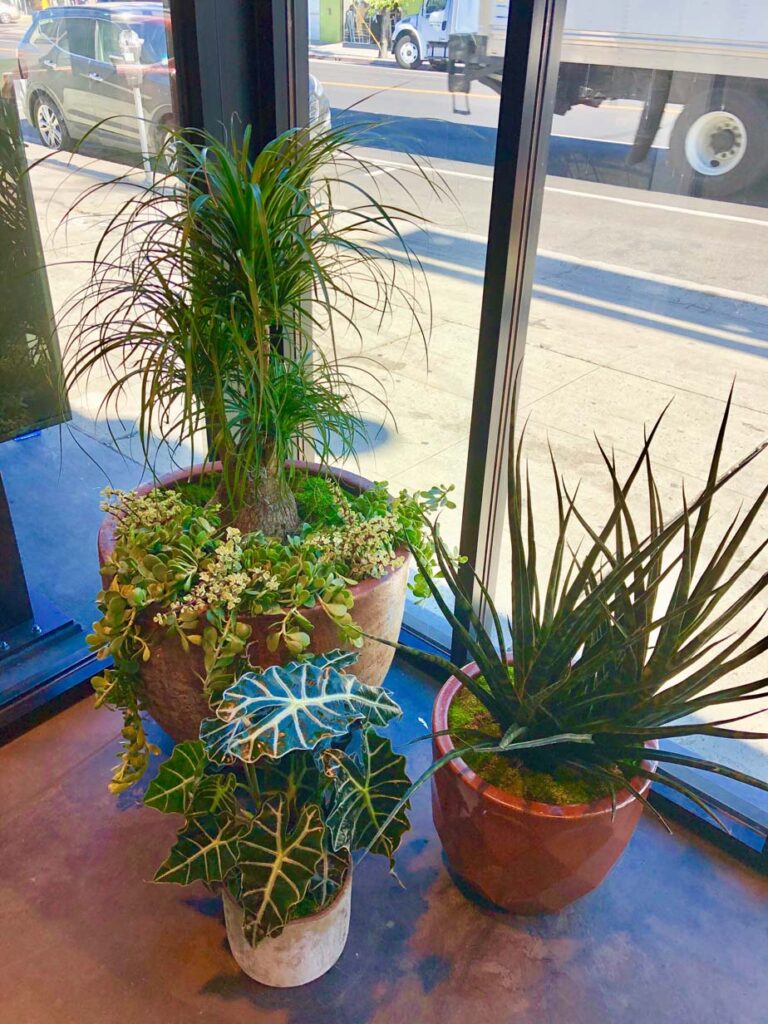
The impact of indoor plants depends not only on the plants themselves, but also on how they are used within a space. Placement influences how plants interact with traffic flow, available light, sightlines, and the purpose of a room. When placed with purpose, plants can help define entry points, soften transitions, guide movement, and create focal areas that make an interior feel more cohesive and comfortable.
Grouping Plants for a Natural Effect
Biophilic design is most effective when natural elements feel integrated rather than added as decoration. Grouping plants can help mimic the layered, varied feel of nature more effectively than scattering them evenly throughout a room, while features like moss walls can add texture and reinforce that connection to the natural world. This approach can create more depth, softness, and visual rhythm, helping the space feel more natural and visually unified.
Biophilic Design Case Study
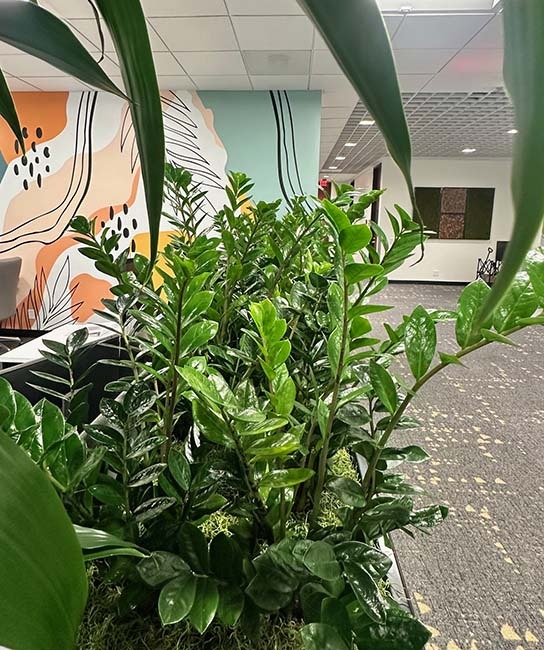
City of Irvine City Hall is a strong example of how biophilic office design can improve civic workplaces during and after a major renovation. During the 2024–2025 City Hall remodel, Growing Roots worked with Urban Arena and the City’s team to install and maintain a large-scale interior plantscape program that enhanced temporary office spaces and carried through into the newly renovated environment.
The project included more than 600 indoor plants, moss walls, integrated planter solutions, and natural design elements selected to complement the building’s architecture and improve the experience for staff and visitors.
The City of Irvine used biophilic design to make its government offices more comfortable, visually cohesive, and functional for staff and visitors alike.
Biophilic Design Services
Biophilic design services help turn the idea of nature-connected interiors into something intentional, functional, and fully integrated with the space. Working with a Certified Biophilic Design Practitioner means looking beyond plant placement alone and considering how greenery, materials, layout, and long-term care come together to support the way a space feels and performs.
These services often include interior plant design, selection of decorative containers, oversight of installation, and ongoing plant maintenance. Each element is considered in relation to the space itself — including its scale, architecture, light, circulation, and everyday use so that the finished design feels cohesive and appropriate to the space.
Any interior can be shaped by natural influences in a way that feels both subtle and meaningful. The plantscape is not treated as an accessory, but as part of the overall design language, bringing texture, depth, and visual continuity to the setting. In this way, it supports an interior that feels considered, functional, and in keeping with the character of the space.
Through thoughtful planning and environmentally responsive choices, biophilic design services help create interiors that are visually refined and better aligned with how the space is meant to be used.
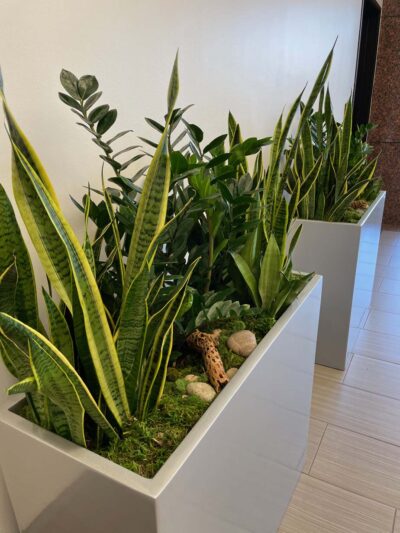
Whether you’re updating a small area or planning a larger transformation, we can help bring natural elements into your interior spaces with purpose.
FAQs About Biophilic Design
No. While biophilic design is often associated with workplaces, its principles can be applied in many types of interior environments. The right approach depends on the goals, layout, and function of the space.
Biophilic design is the broader concept. Interior plantscaping is one practical way to support it by using living plants in interior spaces.
Yes. Biophilic design does not require a large footprint to be effective. Even in smaller interiors, thoughtful use of plants, natural light, organic materials, and nature-inspired textures can make a space feel more comfortable, welcoming, and connected to the natural world. The key is choosing elements that fit the scale and function of the space.

Some elements of biophilic design can absolutely be done as a DIY project, especially in homes or small spaces. Adding indoor plants, improving access to natural light, using natural materials, and introducing nature-inspired colors or textures are all approachable starting points. For larger spaces or more complex environments, professional guidance can help ensure the design feels cohesive, functions well, and supports the goals of the space.
Lifestyle / Engagement
Take a 10-minute Challenge
Discover a daily routine that can improve your health and well-being, while also deepening your connection to the world around you.
Effortlessly recharge your sense of calmness and reconnect with nature right in your own space, anytime you want, day or night! How? Try out Sit Spot!