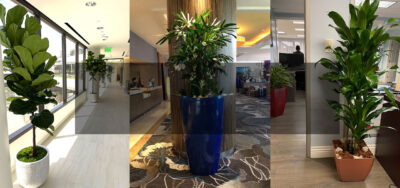
A wilting plant in your office or lobby area sends the wrong message before a single word is exchanged.
Property managers, hotel managers, and facilities directors invest real budget in biophilic design: living walls, statement plants, and greenery that make a space feel intentional and cared for. But that investment only pays off if the plants actually look healthy long after the installation. A struggling fiddle leaf fig by the front desk or a yellowing plant in a conference room doesn’t read as “budget cuts” to visitors; these are clear signs of plant stress and read as neglect.
The good news: plant stress shows up early, and the warning signs are easy to spot once you know what to look for. Here’s what to watch for, why it happens more often in commercial spaces than people expect, and when it’s time to bring in a professional plant care team.
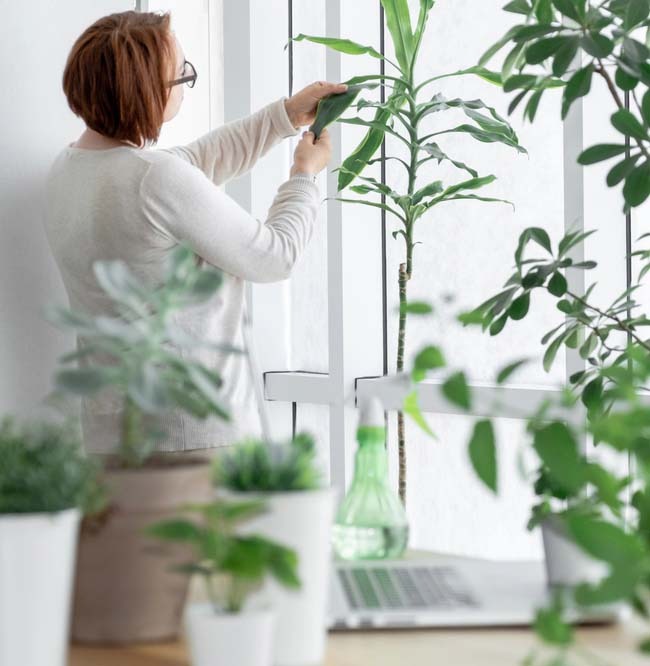
Noticing a few plants that don’t quite match the polished look of the rest of your property? A quick visit from our commercial plant care team can help you understand what’s going on and what it would take to get your greenery back to its best.
Noticing a few plants that don’t quite match the polished look of the rest of your property? A quick visit from our commercial plant care team can help you understand what’s going on and what it would take to get your greenery back to its best.
Signs of Plant Stress in Office and Lobby Plants: Quick Checklist
As you walk into your office or around the lobby area, take a visual sweep of your plants to get a fast read on plant health. Look for these warning signs of plant stress. Catching them early is the difference between a quick fix and a full plant replacement:
If you’re noticing two or more of these on the same plant, it’s past the point of a quick fix. The plant needs a real diagnosis by an interior plant care specialist, not just a splash of water.
Why Your Interior Plants Are Showing These Signs of Stress
Each of these signs of plant stress points to a different root cause, and in commercial spaces, the cause is often tied to the building itself rather than the plant. Here’s what’s likely behind each one.
Drooping or Yellowing Leaves: Watering Inconsistency
Drooping and yellowing usually trace back to watering that’s either too frequent or too irregular. In offices and lobbies, this is often a symptom of shared responsibility, where whoever remembers to water waters, and whoever doesn’t doesn’t. Without a consistent schedule, plants swing between too much and too little moisture, and the leaves show it.
Brown, Crispy Leaf Tips: Low Humidity from HVAC Systems
Commercial HVAC systems are built for people, not plants. The low humidity that keeps a lobby comfortable can dry out leaf edges over time. As a result, the dry air constantly robs the leaves of water, which causes those ugly, brown, crispy edges.
Leaf Drop: Environmental Shock from Relocation or Drafts
Plants placed near entrances, loading docks, or frequently opened doors are exposed to temperature swings and drafts they’re not built for. Leaf drop is often the plant’s way of coping with a location that doesn’t match its needs.
Stunted or Leggy Growth: Insufficient or Mismatched Light
Deep lobbies, interior conference rooms, and spaces with limited natural light can leave plants stretching for light they’re not getting. The result is sparse, leggy growth instead of the full, healthy look the space was designed around.
Pale or Faded Leaf Color: Nutrient Depletion
Without a regular fertilization schedule, interior plants gradually lose the nutrients that keep their color vibrant. This is easy to miss because it happens slowly, until a once-vivid plant looks noticeably washed out.
Soil That’s Always Dry or Always Soggy: A Sign of Inconsistent Care
Soil moisture is one of the clearest indicators of whether a plant has a real care routine behind it. Consistently dry soil signals watering is being missed. Consistently soggy soil signals overcorrection. Both point to the same underlying issue: no dependable maintenance system in place.
Commercial Plant Maintenance Challenges in Long Beach and the Surrounding Areas
Interior plants in a home usually have one person paying attention to them. In an office, hotel, civic center, or reception area, that job often belongs to no one in particular, which is exactly why problems creep in slowly and go unnoticed until it’s too late.
Add in Southern California’s varied environmental conditions, and the challenge doubles. We serve properties across Long Beach, Los Angeles, Orange County, Thousand Oaks, and Ventura County, and the coastal and inland areas within that footprint each bring their own set of challenges.
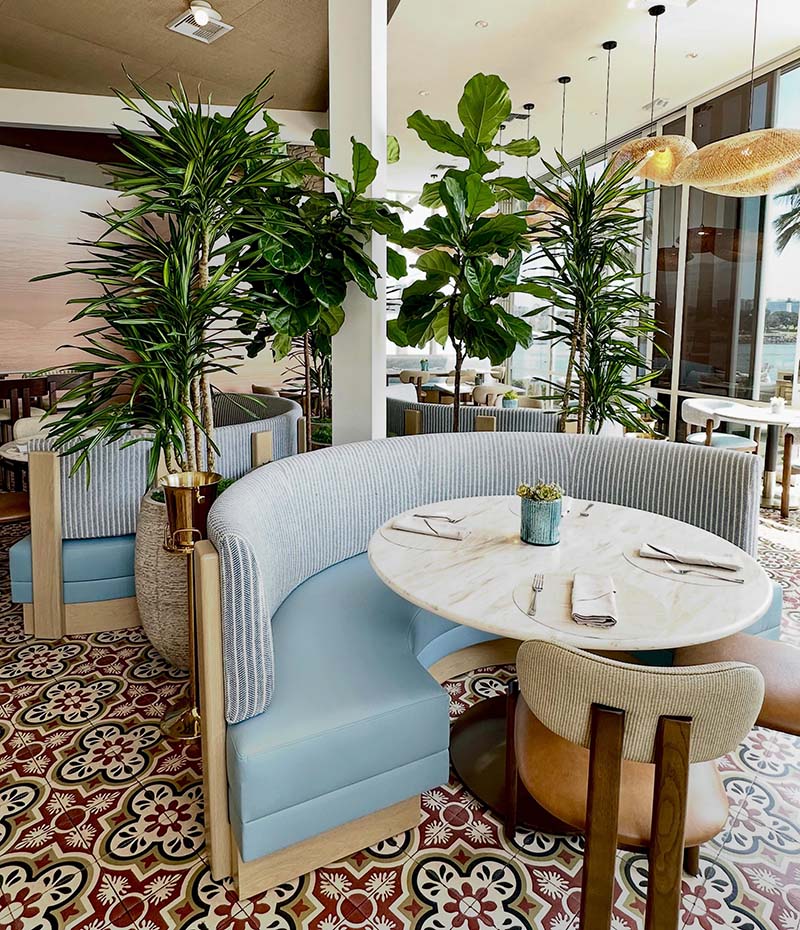
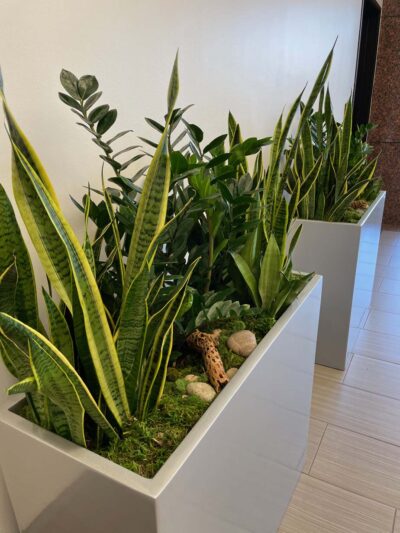
Along the coast, in Long Beach, Los Angeles, and Orange County, buildings deal with salt-laden air that settles on leaves and pulls out moisture faster than inland plants experience, especially near windows or entrances facing the water. In our maintenance visits, salt-sensitive species like ficus and areca palms develop crispy brown tips well before hardier options like sansevieria or ZZ plants show any stress. The marine layer adds to it, with humidity swinging from damp mornings to dry afternoons, keeping coastal plants in a constant state of adjustment.
Further inland, in areas like Thousand Oaks and Ventura County, the challenge is different. Drier heat and ambient humidity 20 to 30 percent lower than the coast pulls moisture from leaves and soil faster, especially in buildings with large windows or heavy afternoon sun. We typically see this show up as leggy growth from plants stretching toward inconsistent light, and soil that dries out between visits, even on a normal watering schedule.
Then there’s the building itself.
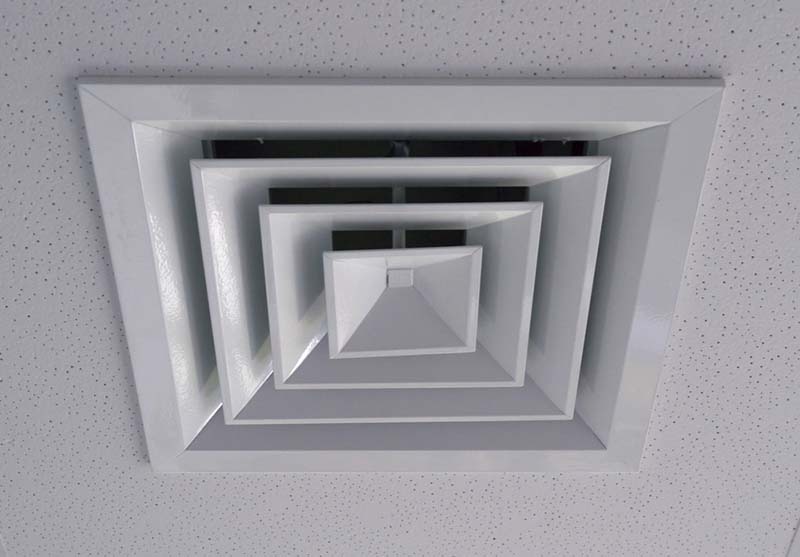
Offices, hotels, and lobbies run air conditioning and heating almost nonstop to keep guests and employees comfortable. That system is great for people, but it pulls moisture out of the air, which is part of why indoor plants in commercial spaces develop those crispy brown tips we covered earlier.
A plant sitting under an A/C vent is working a lot harder than one in a naturally ventilated space.
None of this means interior plants can’t thrive in such conditions. It just means commercial plant maintenance needs to account for the specific conditions of each property, not a generic care schedule pulled from a plant tag. A routine built for a coastal Long Beach lobby isn’t going to hold up the same way in a Thousand Oaks office with drier inland air, and the reverse is just as true.
This is usually where the disconnect happens. Whoever ordered the plants for the space, whether that’s a plantscape designer, a property management company, or the property owner, isn’t the same person maintaining them day to day.
Without someone accountable for regular care, and without a routine built around each property’s specific climate, plants quietly decline until the signs become obvious.
Commercial Plant Care FAQs
If your office or lobby plants are showing more than one of the signs of plant stress, they’re not going to “bounce back” on their own. We provide ongoing interior plant maintenance for offices, hotels, and commercial properties throughout Long Beach, Los Angeles, Orange County, Thousand Oaks, and Ventura County. Reach out today to schedule a walkthrough and get a tailored plant care plan for your building.
 Earth Day 2026: Easiest Way to Reconnect With Nature