
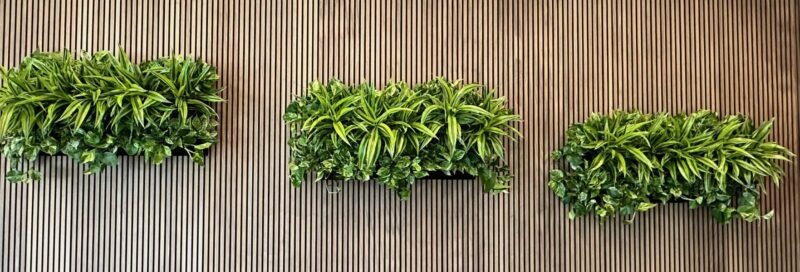
A hybrid green wall combines structural elements and live plants to create a unique vertical garden that enhances aesthetics and provides environmental benefits. This article presents a case study that uses biophilic design techniques to create a hybrid green wall with wood and plants, highlighting the challenges faced, solutions applied, and the results achieved.
Client’s Initial Vision for a Green Wall
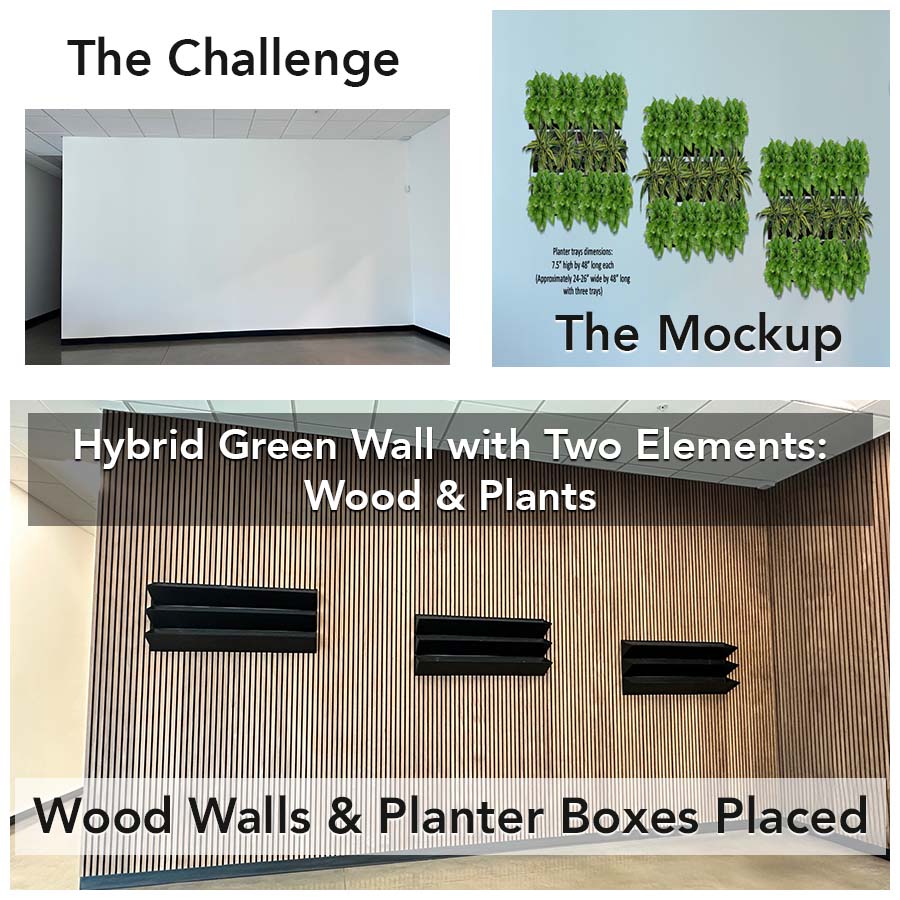
The client initially envisioned a fully green plant wall to create a bold, sanctuary-like environment. However, due to the size of the wall, high costs, and maintenance issues, we shifted to a hybrid approach that blends their original vision with their budget.
Challenges Faced
Cost Considerations for Full Green Walls
A key challenge in achieving the client’s vision of a fully green wall was the cost. While complete green walls are visually striking, they often entail high costs for plant selection, irrigation, and maintenance. After weighing the benefits against the costs, we reconsidered the initial plan and moved toward more budget-friendly options that still deliver an attractive, functional outcome.
Space Limitations and Design Constraints
Space constraints posed challenges as the green wall area was limited, requiring a design that used vertical space effectively without overwhelming the environment. The design team needed to evaluate light conditions, plant vitality, and how seamlessly the installation blended with existing architecture. Creative solutions were essential to produce a final design that balanced functionality with visual appeal.
Solution: The Hybrid Green Wall
Using biophilic design techniques by combining wood and plants.
To tackle the challenges, a hybrid green wall concept was suggested. By integrating wood and plants, the team sought to develop an attractive, budget-friendly, and low-maintenance installation. The wooden structure would support the plants and enhance a natural, organic aesthetic that aligns with the business setting.
Design Process and Plant Selection
The design process included choosing appropriate plants and containers. This project includes two different plant species to promote biodiversity.
Plant Selection and Arrangement
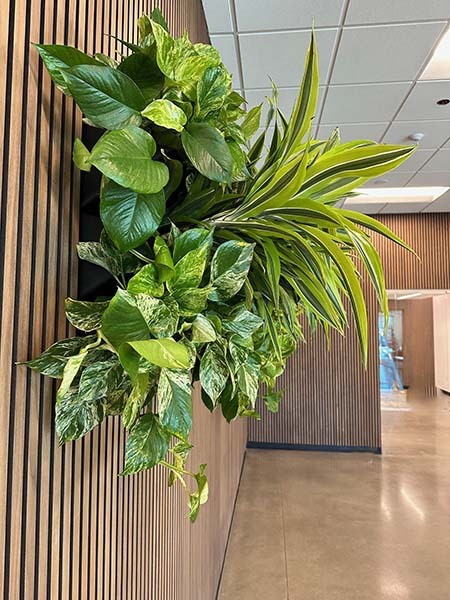
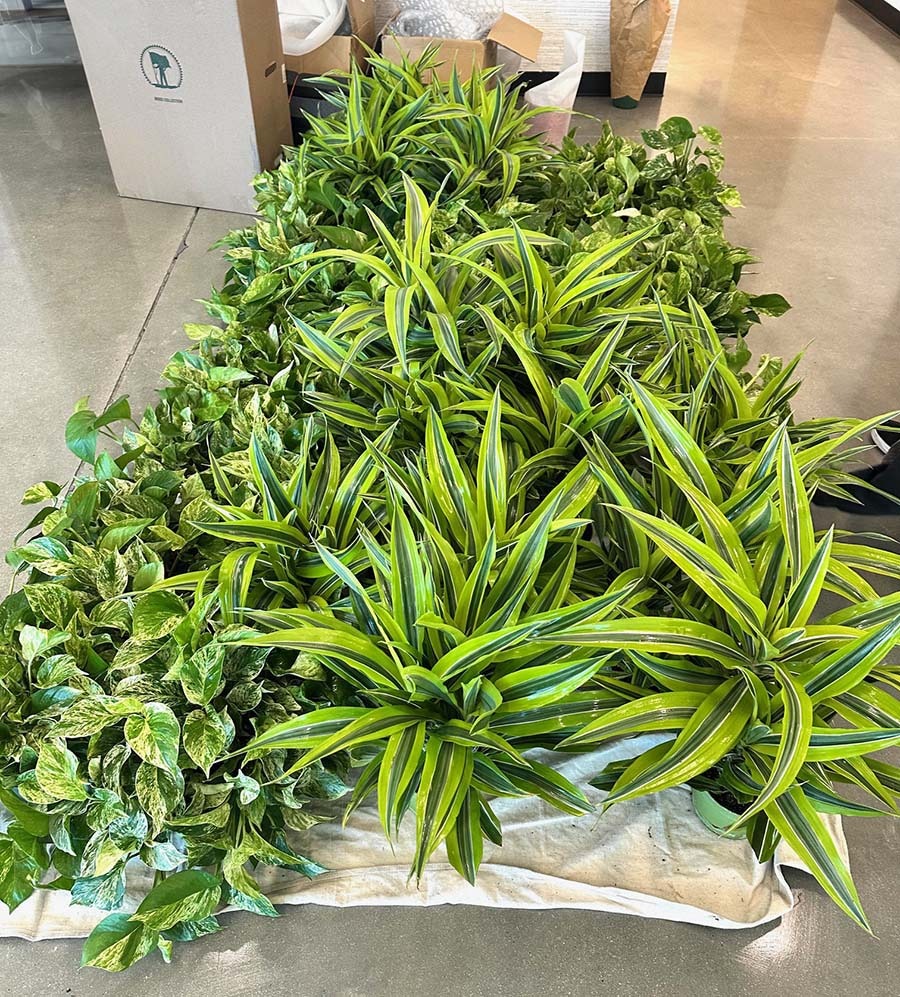
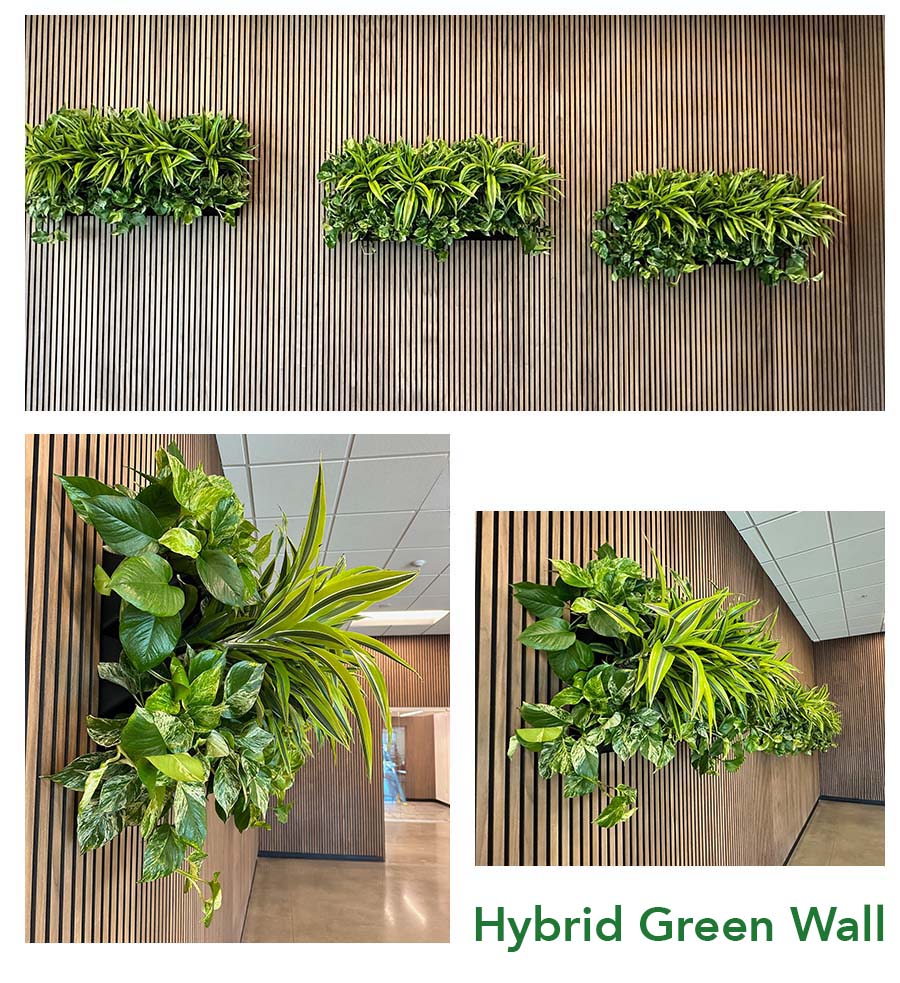
For this project, I chose Marble Queen Pothos and Dracaena Lemon Lime plants.
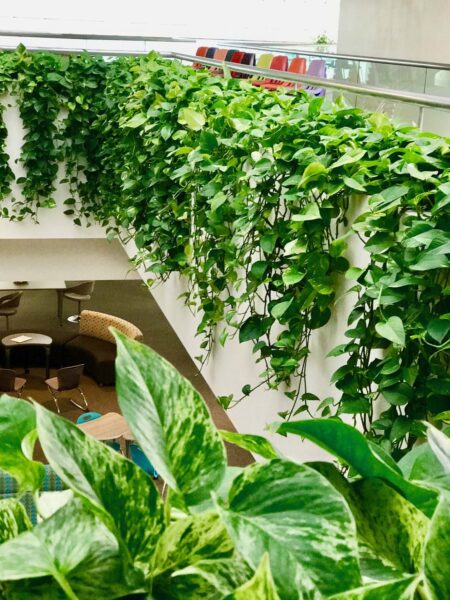
Marble Queen Pothos are ideal for creating a green wall because they grow quickly, cascade beautifully, and require little maintenance.
Dracaena Lemon Limes feature vibrant “lemon lime” leaves with neon green edges and grey-green centers, creating a striking contrast against other plants.
The arrangement was carefully designed to create visual interest, using a mix of colors and textures. This thoughtful selection not only improved the beauty of the green wall but also enhanced the urban ecosystem.
Results and Benefits
Visual Impact and Aesthetic Appeal
The finished hybrid green wall exceeded the client’s expectations, transforming the business space into a lively and inviting environment. The combination of wood and plants created a striking visual impact that became a highlight for visitors and employees alike. The careful arrangement of plants not only added color but also introduced varying heights and textures, giving the wall a vibrant and dynamic appearance. This successful aesthetic demonstrated the potential of hybrid designs in any office or home space.
Cost Savings Compared to Full Green Wall
From a financial standpoint, the hybrid green wall turned out to be a smart investment. Using a wooden framework and choosing low-maintenance plants allowed the project to stay within budget while still creating a striking visual impact. The cost savings were significant compared to the original idea of a full green wall, making this option more accessible for other businesses considering similar setups. Plus, the reduced maintenance needs of the hybrid design meant lower ongoing costs, which further attracts budget-conscious business owners.
Reflecting on the Project’s Success
This case study showcases the successful implementation of a hybrid green wall that aligned with the client’s vision while tackling key challenges. By combining wood and plants, the team developed a visually appealing installation that enhanced the business space and offered environmental benefits. The hybrid approach demonstrated that designing a stunning green wall can be achieved without compromising on budget or space limitations.
Future Implications for Hybrid Green Walls in Business Spaces
This project’s implications go beyond just aesthetics and costs. As companies pursue ways to incorporate nature into cities, hybrid green walls emerge as a creative, functional, and attractive option. This case study can inspire other business owners to improve their spaces while supporting sustainability and health. With the rising interest in eco-friendly design, hybrid green walls offer an excellent chance to connect nature with urban architecture.
FAQs About Hybrid Green Walls
Get a FREE Consultation + Estimate
With over 23 years of experience in the industry, certified expertise, and a focus on quality assurance, Growing Roots brings specialized knowledge that enhances your workspace, government buildings, and learning environments.
Ready to explore how a hybrid green wall can transform your office environment? Contact us today for a consultation. We’ll help you determine which option best suits your space.
 5 Easy Ways To Stop Killing Your Indoor Plants