

For business owners and property managers, creating a pet-safe biophilic design in interior spaces requires more careful plant selection, especially when employees, tenants, customers, or visitors may bring pets into the building.
A plant that looks harmless can cause serious problems if a curious cat or dog chews it. That does not mean you have to choose between attractive spaces and pet safety. Many beautiful plants are considered non-toxic to both cats and dogs.
Thoughtful plant selection makes it possible to create nature-inspired spaces without introducing an unnecessary risk.


Why Does Pet Safety Matter in Commercial Spaces?
Pet-friendly workplaces and properties are no longer unusual. Many companies now offer pet-friendly policies as a way to attract top talent.
Like indoor plants, animals can help reduce stress and improve morale in the workplace.
In pet-friendly workplaces, employees may keep dogs near their desks or bring them into shared offices, break rooms, and meeting areas. The concern is greater in spaces where pets stay for extended periods rather than simply pass through. A curious or bored dog may investigate a floor plant while its owner is working, attending a meeting, or speaking with staff. This concern extends beyond the office.
It’s not just large corporations such as Google and Mars, Inc. that allow pets in the workplace. Many hotels and resorts are also pet-friendly. In fact, there’s a resort about 15 miles south of our Long Beach office, Kimpton Shorebreak, that takes “pet-friendly” to a whole new level! They welcome any pet that fits through the door (regardless of size, weight, or breed) with zero extra fees or deposits and plush pet-bed loaners.
Choosing non-toxic plants is therefore a practical precaution. It can help business owners and property managers avoid placing a known hazard within easy reach of an animal. It also shows that the space was planned with the needs of people and pets in mind.
Are Non-toxic Indoor Plants Safe for Pets to Eat?
Plants classified as non-toxic are not known to contain substances that poison cats or dogs. The non-toxic label distinguishes them from plants such as poinsettias, which are mildly toxic, and sago palms, which are highly toxic.
However, “non-toxic” does not mean “edible” or “guaranteed to cause no reaction.”
Chewing leaves, stems, or flowers can still give an animal an upset stomach, especially if a large amount is eaten. Fertilizers and materials inside the planter may create separate risks. Pets cannot identify what is toxic, so plant safety should not depend on their instincts.
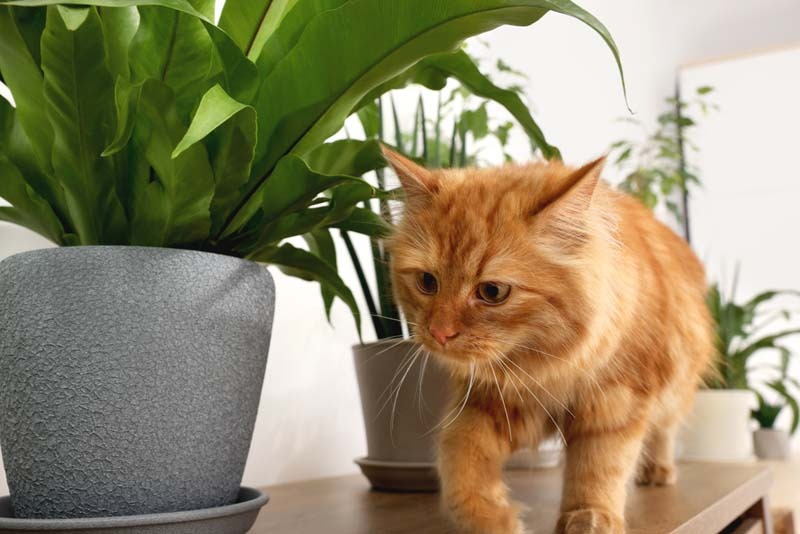
At Growing Roots, we consider each property’s pet policies and how the space is used when selecting, placing, and maintaining plants.
Which Pet-safe Plants Work Well in Offices and Shared Properties?
The right choice depends on the room, the available space, and how much regular attention the plant will receive. These five non-toxic indoor plants offer a useful mix of sizes, colors, and shapes, with options suited to different areas of a commercial space.
Parlor Palm
The parlor palm has soft green leaves and a relaxed, graceful appearance. It works well in reception areas, conference rooms, quiet office corners, and other places that need height without a heavy or overpowering plant. It adapts to rooms that receive modest natural light, making it useful in many commercial settings.
Spider Plant
The spider plant has long, striped leaves that arch over the sides of its container. It is a good choice for a shelf, filing cabinet, reception counter, or raised planter. Because its leaves can dangle, pets may find it especially tempting to play with. Place it somewhere pets cannot access. Even though it’s classified as non-toxic to cats and dogs, the “out of sight, out of mind” approach helps you avoid cleaning up the mess and repotting your plant after your pet decides it’s playtime.
Peperomia
Peperomias are compact plants with leaves that may be smooth, rippled, rounded, or striped. Their smaller size makes them easy to use on desks, counters, bookshelves, and narrow ledges, and they can be found in both hanging and upright forms.
Cast Iron Plant
The cast iron plant is understated. Its broad, upright leaves give it a clean, structured appearance that works well in professional settings. It can add greenery to reception areas, shared offices, and quiet corners without looking overly decorative.
Hoya carnosa
Hoyas are often called wax plants because of their thick, waxy leaves. Their sturdy leaves hold up well in commercial spaces. Keep trailing stems away from areas pets can reach, and avoid placing Hoyas directly under or in front of HVAC vents. A constant stream of dry air may cause leaf drop.
How Can You Confirm That a Plant is Pet-safe?
Before adding any plant to a pet-friendly space, however, confirm its exact identity rather than relying on the name displayed at the store. Common plant names can be misleading. Two plants may share a similar name even though one is non-toxic and the other is not. Labels may also be missing, incomplete, or incorrect.
If you are unsure whether a plant is safe, look it up in the ASPCA’s Toxic and Non-Toxic Plants database. The ASPCA Animal Poison Control Center (APCC) is your best resource for any animal poison-related emergency, 24 hours a day, 365 days a year.
If you think your pet may have ingested a potentially poisonous substance, call (888) 426-4435. A consultation fee may apply.
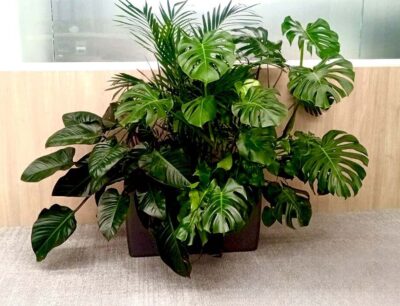
Need help choosing pet-safe plants for your office, lobby area, or shared property? Growing Roots can recommend plants that fit your space, pet policies, and biophilic design goals..
Where Should Pet-safe Plants Be Placed?
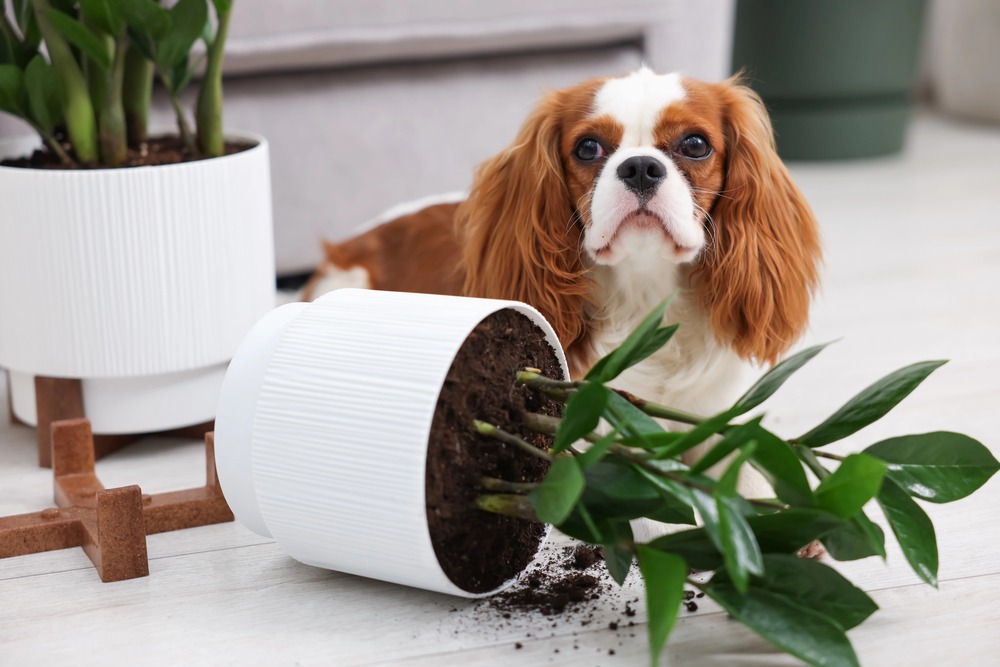
A plant’s location affects both its appearance and its safety. Large floor planters or statement trees should not narrow walkways or create tripping hazards. Smaller plants should sit on stable surfaces where a leash, bag, or wagging tail can’t easily knock them over.
Plants with long or trailing leaves can be placed on sturdy shelves or in secure raised containers. This keeps them visible while making them less eye-catching to animals looking for something to chew or bat around.
Avoid placing plants beside food and water bowls, pet-relief areas, or building entrances where excited animals tend to gather. Choosing a quieter location protects the plant and reduces temptation.
How Can Plants Be Used Without Making a Space Feel Cluttered?
A few well-placed plants usually have more impact than a large collection scattered around the room. Start with the areas people notice first, such as the reception desk, waiting area, main hallway, or shared meeting space.
Use taller plants to fill bare corners and smaller plants to add interest to countertops and shelving. Repeating the same plant or planter in several locations can create a more orderly appearance across a large office or multi-use property. Grouping a few plants in designated areas can also break up a large commercial interior without making it feel crowded.
The goal is not to fill every open surface. It is to make the space feel more comfortable, cared for, and connected to nature.
How Do You Keep a Pet-safe Plant Display Safe?
Check plants regularly for fallen leaves, spilled soil, damaged containers, or standing water. Remove anything that a passing animal might pick up. Secure tall or top-heavy planters so they cannot tip if bumped.
Employees and tenants can also be encouraged to check before bringing personal plants into shared areas. One unidentified desk or lobby plant can undermine an otherwise careful plan.
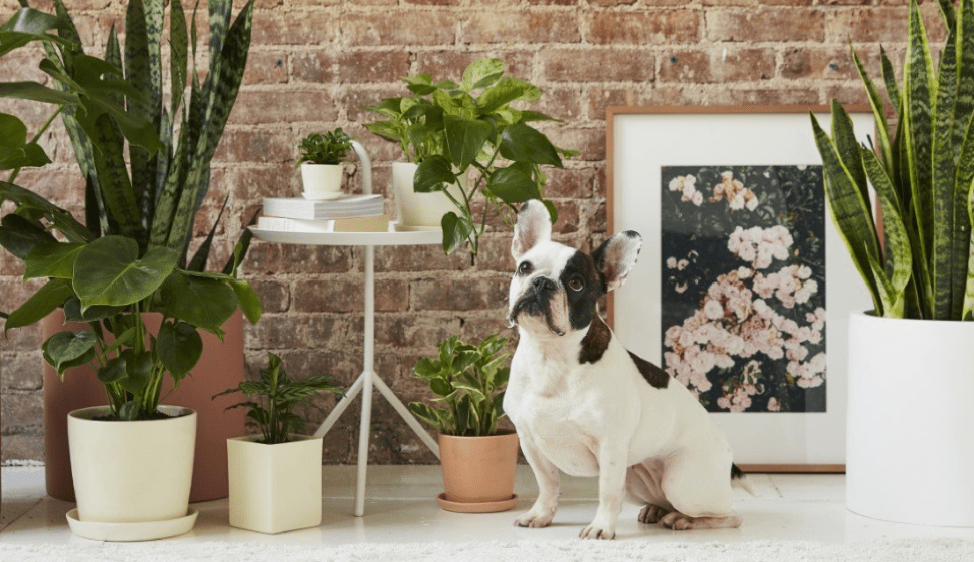
Pet-safe Biophilic Design Can Still Be Beautiful
Pet-safe biophilic design is not about settling for plain or limited choices. Parlor palms, spider plants, cast iron plants, peperomias, and hoyas are just a few of the non-toxic plants that provide plenty of variety for offices and shared properties.
The key is to verify each plant, consider where animals may encounter it, and look beyond the plant itself to the container and products used around it.
With those precautions, businesses, property managers, and homeowners can create attractive spaces that feel greener, healthier, and better prepared for the people and pets who use them.

 National Indoor Plant Week: 4 Simple Ways to Participate